What Does Verizon’s New Hurricane Response Tech Mean for You?
Drones, AI tech could restore mobile networks faster

May 7, 2026 | Share 


News
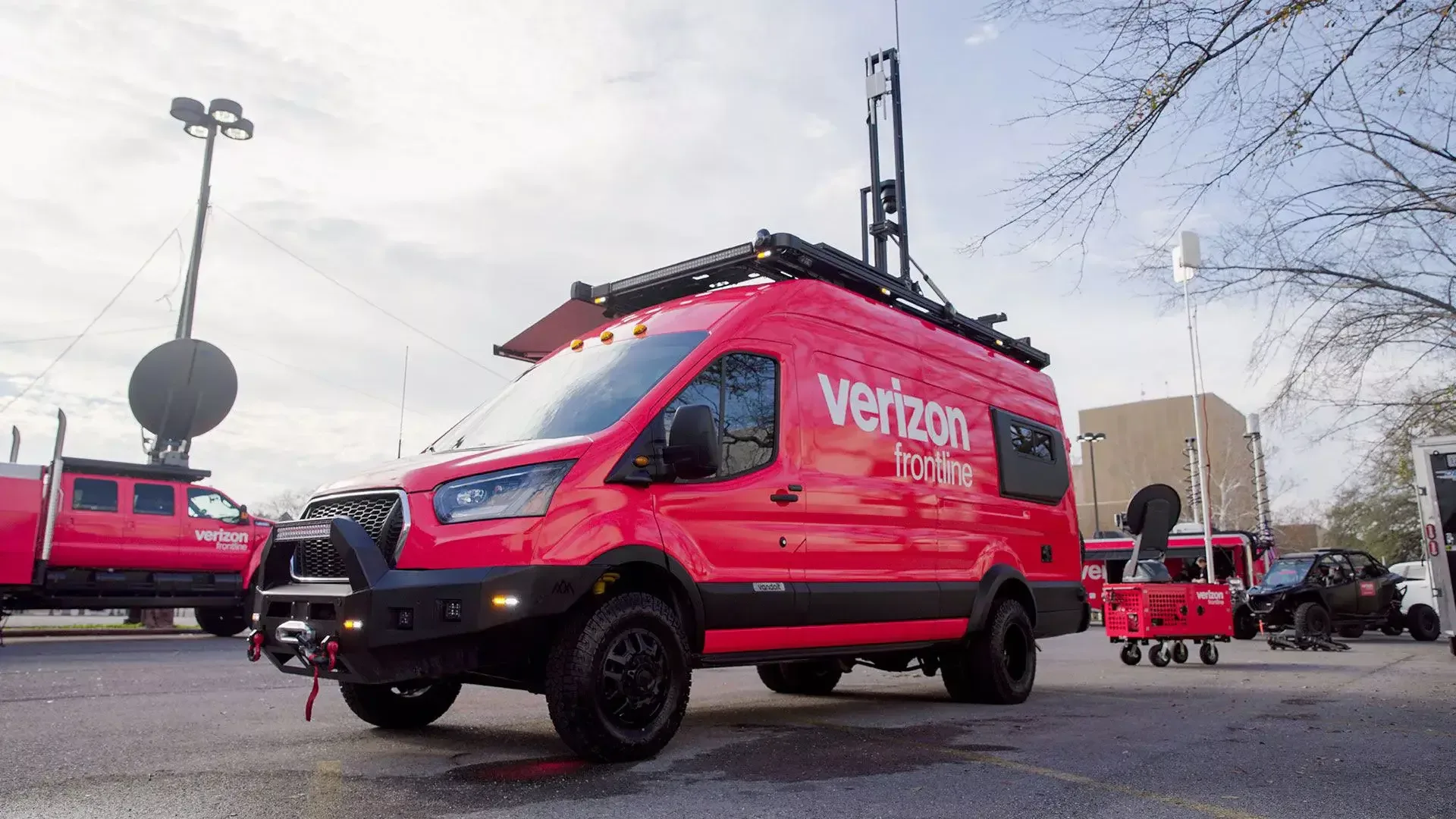
Verizon’s hurricane preparedness fleet includes the Mobile Emergency Operations Center, Tactical/Mobile Command Trailer, the Wireless Emergency Community Center (WECC), Big Red (a vehicle with 24 workstations), and Community Connectivity Vans, plus 3,000 mobile assets. Source: Verizon.
New hurricane response technology from Verizon means its crews won’t have to wait for floodwaters to recede or roads to be cleared before they know where the network has been damaged.
Instead of sending crews out to climb towers and inspect in person, new disaster response tools announced Wednesday will allow Verizon’s engineers to see damage and plan for repairs virtually.
On this page:
Drones and AI | Satellite backhaul | Multi-orbit mobile hotspots | Backup internet | My take
On this page:
Drone footage and AI analysis
Verizon plans to use Digital Twin technology, which will help engineers compare before-and-after images captured by drones and analyzed by artificial intelligence. The sooner Verizon knows where repairs are needed, the sooner they can be completed.
That matters for Verizon’s customers on the ground because when hurricanes hit, 4G LTE and 5G signals are the only way to communicate.
“In an emergency, every second counts. Whether it’s a family checking in on a loved one or a first responder coordinating a rescue mission, we understand the responsibility that comes with the work we do,” said Joe Russo, Executive Vice President of Global Networks and Technology at Verizon. “We don’t just build a network; we build a resilient ecosystem designed to withstand the harshest conditions, so our customers can trust they are never alone when a storm hits—and after.”
What happens when underlying fiber cables are destroyed
All Verizon’s cell phone towers are connected by miles and miles of fiber-optic cables. Some storms damage those cables in addition to the towers themselves, and that can mean long delays for repairs.
Those waits could be reduced dramatically if Verizon’s plans to introduce satellite backhaul to “storm-prone macro cell sites” in the Southeast come to fruition. The company is testing this permanent satellite connectivity solution now, in combination with 100% backup battery and generator power.
“These sites are designed to continue processing cellular traffic even if both commercial power and fiber lines are lost,” the company said in its press release about hurricane preparation.
Multi-orbit tech for disaster relief
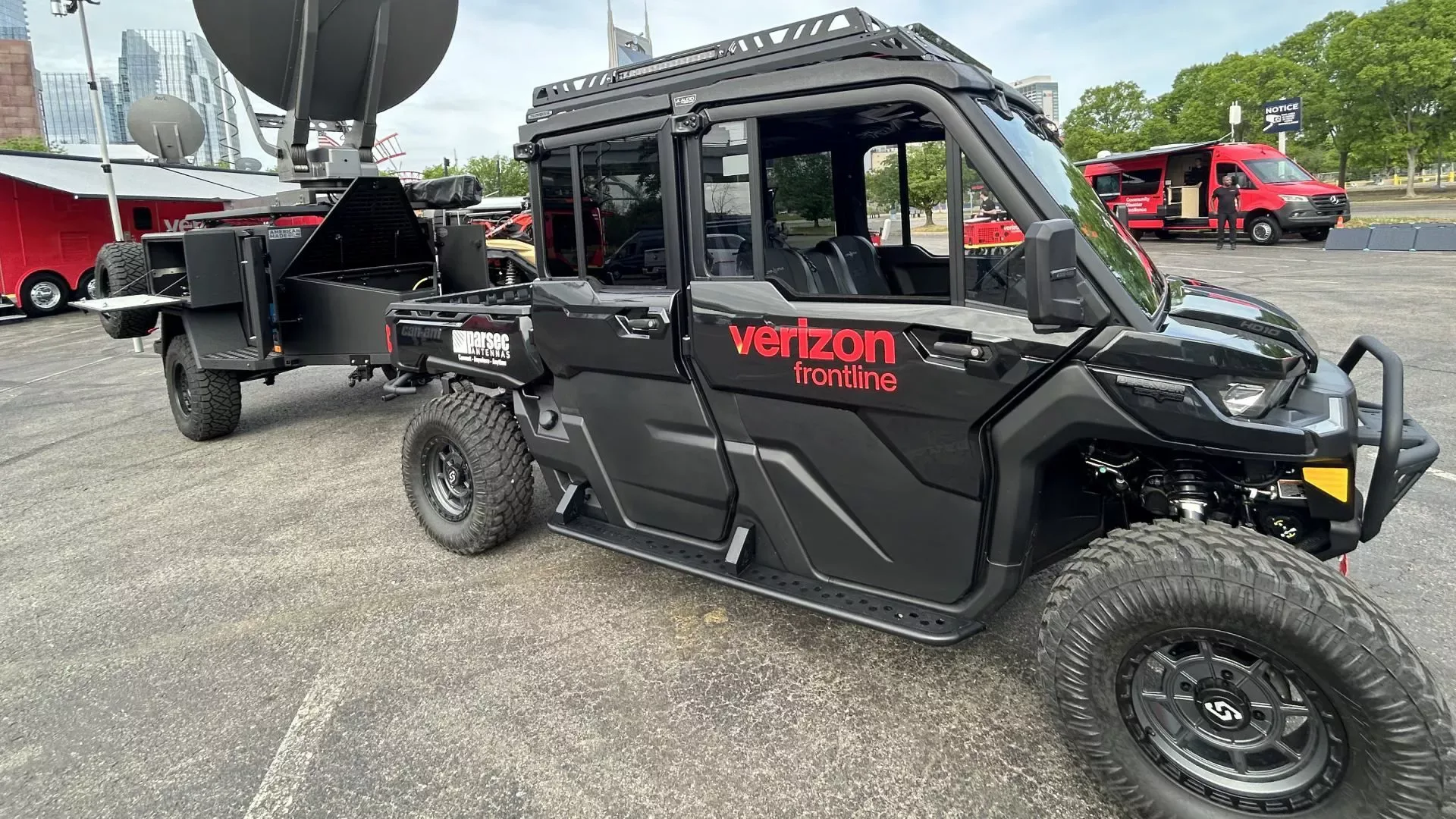
Verizon’s new off-road vehicle that can toggle between satellite internet systems to create a 5G hotspot for first responders. Source: Verizon
Damage to fiber-optic and electrical cables can also mean that first responders have no way to communicate with one another on the ground. Here, too, satellite internet could come to the rescue.
Verizon’s new “Multi-orbit Off-Road Trailer” can create localized 5G hotspots for first responders and is capable of toggling between low-Earth orbit (LEO) and geostationary (GEO) satellites. The trailer can also act as a distribution point for 5G LEO connection kits while Verizon completes cell site repairs, Verizon said.
How you can stay connected during hurricane season
We’ve written before about how you can prepare your tech for a natural disaster. Since then, more and more providers have started offering backup internet as an add-on service. These plans connect to 5G networks automatically when your main fiber or cable connection fails. They’re affordable and convenient, and we recommend them highly.
Read about other ways to get backup internet and how to stay connected, even if you can’t get a good cell signal.

Shopping for reliable internet ahead of hurricane season?
Enter your zip code for a quick list of local providers.
My take: Verizon is putting satellite, AI tech to good use
If you’re anything like me, you’re tired of hearing about how great artificial intelligence is, and maybe a little worried about satellites taking over our night skies. But in this case, Verizon deserves our thanks for putting these technologies to good use.
AI prompting of large language models can be fun and convenient, but using AI to speed up disaster recovery can save human lives. Here’s wishing speed, efficiency, and safety to all the hard-working men and women who will be on the front lines of mobile network recovery when the next storm hits.
Author - Chili Palmer
Chili Palmer covers home tech services, with a special focus on understanding what families need and how they can stay connected on a budget. She handles internet access and affordability, breaking news, mobile services, and consumer trends. Chili’s work as a writer, reporter, and editor has appeared in publications including Telecompetitor, Utah Business, Idaho Business Review, Benton Institute for Broadband & Society, and Switchful.com.
Editor - Jessica Brooksby
Jessica loves bringing her passion for the written word and her love of tech into one space at HighSpeedInternet.com. She works with the team’s writers to revise strong, user-focused content so every reader can find the tech that works for them. Jessica has a bachelor’s degree in English from Utah Valley University and seven years of creative and editorial experience. Outside of work, she spends her time gaming, reading, painting, and buying an excessive amount of Legend of Zelda merchandise.
Related Posts